On this page
Key takeaways
- Jewellery is the rare purchase that is emotion, heirloom and investment at once — so the marketing job isn’t to sell a product, it’s to earn enough trust for a customer to spend a month’s savings on you.
- With gold above ₹1,00,000 per 10g in 2025, the festive buyer is trading grams for design and meaning — the brands winning are selling craftsmanship and occasion, not weight.
- The modern journey is hybrid: customers discover and fall in love online, then walk into the showroom to buy. Your digital presence has one job — get them through the door already convinced.
Jewellery is the hardest thing in Indian retail to sell on a screen. It’s big-ticket, deeply emotional, bought for the most important days of a life — and yet the buying decision now begins on a phone, months before anyone touches the piece. Here’s how Indian jewellery brands market across the showroom and the scroll: building a visual identity worthy of the product, winning the festive and wedding waves, and earning the trust a big-ticket purchase demands.
What makes jewellery marketing different from any other retail?
Jewellery marketing is different because you’re selling four things at once: emotion, occasion, trust and investment. A customer isn’t buying a necklace — she’s buying her daughter’s wedding, a Dhanteras blessing, a store of value for hard times. No other retail category carries that weight, which is why discount-led tactics fall flat here.
Get the emotional stakes right and everything else follows. A ₹500 impulse buy forgives a weak brand; a ₹3 lakh wedding set does not. The customer will research for weeks, compare makers, ask family, read every review and walk into three showrooms before she commits — because the purchase is rare, expensive and loaded with meaning. That long, anxious consideration window is your real battleground. The brand that shows up consistently across it, looking trustworthy and beautiful at every step, wins the sale that the cheapest price never could.
There’s also the dual nature of the spend that no marketer can ignore. Jewellery is simultaneously a purchase and an asset — a thing of beauty and a hedge a family can liquidate in a crisis. That means your marketing has to speak to the heart (the design, the occasion, the milestone it marks) and to the head (purity, certification, resale value, transparent pricing) in the same breath. Lean too far into pure aspiration and a cautious buyer doesn’t trust you with that much money; lean too far into rates and grams and you become a commodity counter no one feels anything about. Holding both at once is the craft.
Why is premium visual identity non-negotiable for a jewellery brand?
Because in jewellery, the product is the brand — and cheap visuals make even fine craftsmanship look fake. The way you photograph a ring, set your type, choose your colours and stage a campaign is the customer’s only proof of quality before they visit. Sloppy imagery doesn’t just look bad; it quietly signals ‘don’t trust us.’
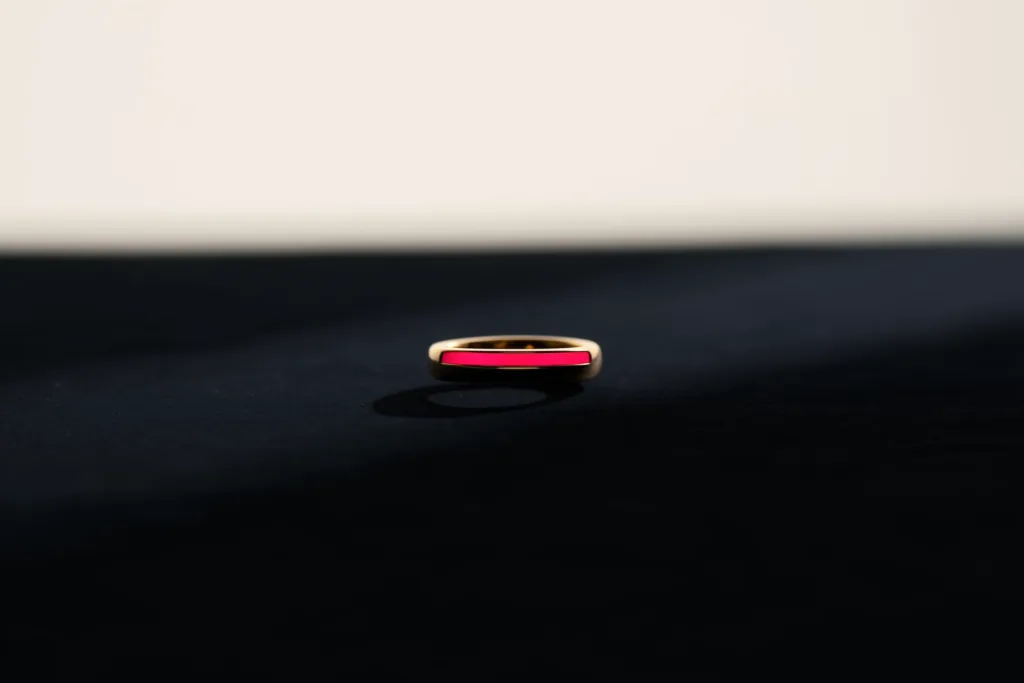
Think about how a buyer actually judges you. She can’t feel the weight or test the purity through a screen, so she reads every visual cue as a stand-in for trustworthiness. Grainy, badly lit product shots on a busy background tell her you’re a local counter chasing volume. Macro photography that catches the fire in a diamond, the texture of a hand-set kundan, the warm depth of 22-karat gold on a clean dark ground — that tells her you respect the craft, and by extension, her. A coherent branding and positioning system — a refined logo, an elegant palette, considered typography, a consistent photographic style — is what separates a brand a bride aspires to from a shop she haggles in.
This is where most Indian jewellers under-invest and overpay later. They’ll spend lakhs on inventory and a showroom fit-out, then hand their Instagram to whoever’s cheapest, and wonder why the brand never feels premium. Photography especially is not a cost to minimise — for a jewellery brand it is the single most important marketing asset you own, because it carries the entire promise of quality in a medium where the customer can only look. Get the visual identity right once and it works everywhere: the website, the festive campaign, the showroom signage, the gifting box. The piece may be the hero, but the brand around it is what lets you charge for the name as well as the gold.
Nobody spends three lakh on a screen. They spend it on a brand they’ve decided to trust — and in jewellery, the photography is that decision, made for them before they walk in.— Murtaza Udaypurwala, DESENO
How do you win India’s festive and wedding gold demand?
You win the festive and wedding seasons by planning for them like a campaign, not a coincidence. India’s gold-buying calendar is fixed — Akshaya Tritiya, Dhanteras and Diwali, then the long wedding muhurat season — so the brands that dominate are the ones building collections, content and ad spend around those dates months in advance.
The mistake is treating each occasion as a one-week sale. The buyer’s journey starts far earlier: a bride-to-be is saving Instagram posts and shortlisting jewellers weeks before Dhanteras, and wedding shopping begins a season ahead of the muhurat. So your festive marketing should run in waves — an inspiration phase that seeds desire (lookbooks, bridal edits, ‘what to gift this Dhanteras’), then a consideration phase (collection launches, certification and EMI clarity, store-visit nudges), then the conversion push as the date nears. Anchor it all to a planned calendar; our festive-season advertising approach exists precisely because reactive, last-minute campaigns lose to the brand that booked the customer’s attention in advance.
2025 added a twist every jeweller is navigating. With local gold hovering above ₹1,00,000 per 10g and the World Gold Council and trade bodies reporting that festive jewellery demand could fall as much as 27% year-on-year in volume even as rupee-value sales hold up, the customer is buying fewer grams but still buying. That changes the message. Selling on weight and rate alone is a losing game when the rate scares people; the winning brands sell design, occasion and meaning — lighter, wearable pieces, lab-grown diamond options, the emotional significance of the milestone — so the buyer feels she’s investing in something beautiful and lasting rather than just absorbing a high price per gram.
How do you bridge the online-discover, in-store-buy journey?
You bridge it by accepting the truth of how India buys jewellery: most customers discover and fall in love online, then walk in to buy. Your digital presence isn’t there to close the sale on a screen — it’s there to get a customer through the showroom door already convinced, with the design and the brand chosen before she arrives.
That reframes what your website and social are for. Treat them as the start of a journey, not a checkout. The job of Instagram and your site is to make her shortlist you, save the piece, and feel confident enough to book a visit. So build the bridges that carry her from screen to store: a ‘book an appointment’ or video-consultation option for serious buyers, virtual try-on for rings and earrings, high-resolution galleries she can zoom into, a WhatsApp line where she can ask about a specific piece and reserve it. For higher-ticket and out-station customers, a video call with a consultant showing the actual piece, on the hand, often does what no photo can — and it has quietly become standard for bridal sales.
The brands that lose are the ones with a beautiful showroom and an invisible internet, or a flashy website that dead-ends with no way to talk to a human. The hybrid customer expects continuity: she should be able to spot a piece on Reels at 11pm, save it, WhatsApp the store the next morning, and have it waiting when she visits that weekend — one seamless thread across channels. Stitch that journey together and you capture the modern buyer; leave gaps in it and you hand her, fully researched and ready to spend, to whichever competitor made the next step easy.
How does a jewellery brand earn trust at such a big ticket?
You earn big-ticket trust by removing every reason for doubt before the customer has to ask. At ₹50,000 to several lakh, the buyer’s biggest fear is being cheated on purity or price. So you lead with proof: BIS hallmarking with the unique HUID, diamond and gemstone certification, transparent making charges, a clear buyback and exchange policy, and real customer reviews.
Make the trust signals impossible to miss, because in 2025 the Indian buyer is more informed than ever. BIS hallmarking is mandatory for gold and each piece carries a HUID a customer can verify herself on the BIS CARE app — so don’t bury that, market it. Spell out what drives the price: metal rate, making charges, wastage, GST, stone value, all itemised, because opacity is what makes buyers assume they’re being fleeced. Publish your buyback and lifetime-exchange terms plainly. Offer certified lab-grown diamonds clearly labelled for the value-conscious buyer. Every one of these is both an ethical obligation and a conversion tool: the jeweller who is transparent looks like the one with nothing to hide, and at this ticket size that perception is the whole sale.
The same logic extends to your packaging and after-sale experience — trust isn’t only built at the moment of purchase. A piece that arrives in cheap packaging undercuts the premium you just charged; considered packaging design, a proper certificate, an authentication card and a warm handover all reassure the buyer she chose a brand that takes itself seriously. Then steward the relationship: a maintenance reminder, a cleaning service, a respectful festive message. A jewellery customer who trusts you doesn’t buy once — she comes back for the next wedding, the next anniversary, the next generation, and she tells her family. In a category sold on trust, the after-sale is where the next sale begins.
| Channel | Primary job | Peak occasion to lean in |
|---|---|---|
| Instagram & Reels | Build desire — craftsmanship, styling, bridal edits | Wedding season & the festive run |
| Google Business Profile + local SEO | Get found by ‘jewellers near me’ ready to visit | Akshaya Tritiya, Dhanteras, Diwali |
| Website + virtual try-on | Let her shortlist, zoom in and book a visit | Always-on; spikes before festivals |
| WhatsApp + video consultation | Answer, reserve, and close out-station & bridal | Wedding shortlisting & high-ticket buys |
| Influencers & customer UGC | Borrow trust — real brides, real reviews | Wedding season & new collection drops |
| Performance ads (Meta / Google) | Drive collection launches & store footfall | The festive waves & gifting moments |
What content actually sells jewellery online?
Content that sells jewellery shows craftsmanship, occasion and people — not price tags. The pieces that perform are macro Reels of a diamond catching light, an artisan setting a stone, a bride in the full set, and styling videos that help her picture the piece in her own life. You’re selling a feeling and proving quality at once.
Lead with three content jobs. First, craftsmanship and heritage: the making-of films, the story of a collection, the meaning behind a design — this is what justifies your price and builds the brand a customer pays a premium to own. Second, styling and aspiration: how to pair a polki set, what to wear for a sangeet, festive looks, everyday-luxury edits — content that turns a passive scroller into someone imagining herself in the piece. Third, education and trust: short, genuine explainers on reading a hallmark, choosing between natural and lab-grown, understanding making charges. That last bucket is pure answer-engine gold — it captures the exact questions buyers type before a big purchase and positions you as the honest expert in the category.
Then let your customers and creators carry the message, because in jewellery, borrowed trust outperforms self-praise. A real bride’s wedding photos in your set, a happy customer’s unboxing, a respected creator’s honest styling reel — all read as proof in a way your own ad never will. Thoughtful influencer marketing — the right regional creators and real customers, not the biggest follower count — gives a cautious buyer the social permission to spend. The pattern that wins: brand-led films to set the standard, customer and creator content to prove it’s true.
Should you market a national jewellery brand and a local showroom the same way?
No — the strategy splits by reach. A multi-city brand competes on brand equity, collections and aspiration at scale; a single-showroom jeweller wins on local dominance and relationships. Both need a strong visual identity and trust signals, but where they spend their time and money is genuinely different.
For a local or regional showroom, the highest-return work is hyper-local. A complete, active Google Business Profile is your most valuable asset — because when someone searches ‘jewellers near me’ or ‘bridal jewellery in Nashik’ on Dhanteras morning, the map pack decides who they visit. Pair strong local SEO with steady review velocity, geotagged photos, community presence and word-of-mouth, and you own your catchment in a way a national chain can’t easily dislodge. Your edge is trust built face to face, families who’ve bought from you for two generations, and the ability to know a customer personally.
A national or fast-scaling brand plays a different game: consistent brand identity across every showroom and screen, big-occasion campaigns, performance marketing at scale, marketplace and own-site commerce, and influencer reach across regions. The risk at scale is inconsistency — a brand that looks premium in Mumbai and cut-rate in a Tier-2 city erodes its own equity — so brand guidelines and disciplined execution matter more, not less, as you grow. The principle for both is the same; only the lever changes. Decide honestly which you are right now, put your budget against the channel that actually moves your kind of customer, and resist copying the playbook of a brand operating at a completely different scale.
The bottom line
Jewellery marketing in India is the art of earning enough trust, online, for someone to spend big offline. The product is the hero, but the brand around it — the photography, the certification, the transparent pricing, the seamless path from a late-night Reel to a confident showroom visit — is what lets you sell heritage in a scroll. In a 2025 of record gold prices, stop competing on grams and rate; compete on design, occasion, meaning and trust. Plan the festive and wedding waves like campaigns, make your visual identity worthy of what you sell, prove your purity before anyone asks, and let real brides and customers carry your name. Do that, and you don’t just sell a piece — you become the brand a family returns to for every milestone that matters.
Frequently asked questions
Indian jewellery brands market online by building desire and trust before the in-store purchase. The core stack is premium product photography, Instagram and Reels for craftsmanship and bridal styling, a website with virtual try-on, local SEO and a complete Google Business Profile, WhatsApp and video consultations for serious buyers, plus influencer and real-customer content. The goal is to get a customer through the showroom door already convinced.
Because the customer can’t touch the piece before they buy, your photography is the only proof of quality they have. Cheap, badly lit images make even fine craftsmanship look fake and signal ‘don’t trust us’ on a big-ticket purchase. Macro, well-lit shots that catch a diamond’s fire or gold’s warmth carry the entire promise of quality — making photography the single most important marketing asset a jewellery brand owns.
When gold sits above ₹1,00,000 per 10g, as in 2025, jewellers should stop selling on weight and rate and start selling on design, occasion and meaning. Push lighter, wearable pieces, clearly labelled lab-grown diamond options, and the emotional significance of the milestone. The World Gold Council noted festive volume falling even as rupee-value sales held — so the buyer is purchasing fewer grams but still values beautiful, lasting pieces.
By removing doubt before the customer asks. Lead with proof: BIS hallmarking and the unique HUID a buyer can verify on the BIS CARE app, diamond and gemstone certification, itemised transparent pricing (rate, making charges, GST, stone value), a clear buyback and exchange policy, and genuine reviews. At ₹50,000 to several lakh, transparency is the conversion tool — the jeweller with nothing to hide looks like the safe choice.
Instagram is the strongest platform for Indian jewellery, because it is visual, aspirational and where brides shortlist. Use Reels for craftsmanship and styling, carousels for collections, and Stories for behind-the-scenes and occasion content. Pair it with a well-run Google Business Profile for ‘near me’ discovery and WhatsApp for closing serious buyers. Platform choice matters less than consistent, premium visuals and a clear path from screen to showroom.
A local showroom should win its catchment through hyper-local marketing — a complete Google Business Profile, strong local SEO, steady reviews, geotagged photos and face-to-face relationships — so it owns ‘jewellers near me’ searches. A national brand competes on brand equity, big-occasion campaigns, performance ads at scale and influencer reach across regions, with strict brand consistency. Both need a premium identity and trust signals; only the channel emphasis changes with reach.
How DESENO can help
Services built for what you just read
See it in practice: Swaras — 2.4K Instagram followers in five months, organically